
Construction Query Engine for Faster Answers
Explore how Space AI's Construction Query Engine helps construction teams move beyond CDE search and find source-backed project answers faster.

Summary
Key Takeaways
- 1Construction teams need faster answers across documents, records, workflows, and project systems
- 2A Construction Query Engine turns scattered project information into searchable decision context
- 3Source-backed answers help teams trust AI outputs and reduce manual document review
- 4CQE extends the value of CDE by adding question understanding, context retrieval, and answer delivery
Construction teams have spent years moving information into Common Data Environments, document systems, and shared project platforms. That shift was important. It gave teams a more organized way to store drawings, specifications, RFIs, submittals, meeting notes, cost records, schedules, approvals, correspondence, and closeout documents.
But storage alone does not solve the real operating problem. When a project manager, owner, consultant, or contractor needs an answer, they still have to search through scattered files, open multiple systems, compare revisions, and decide which source can be trusted.
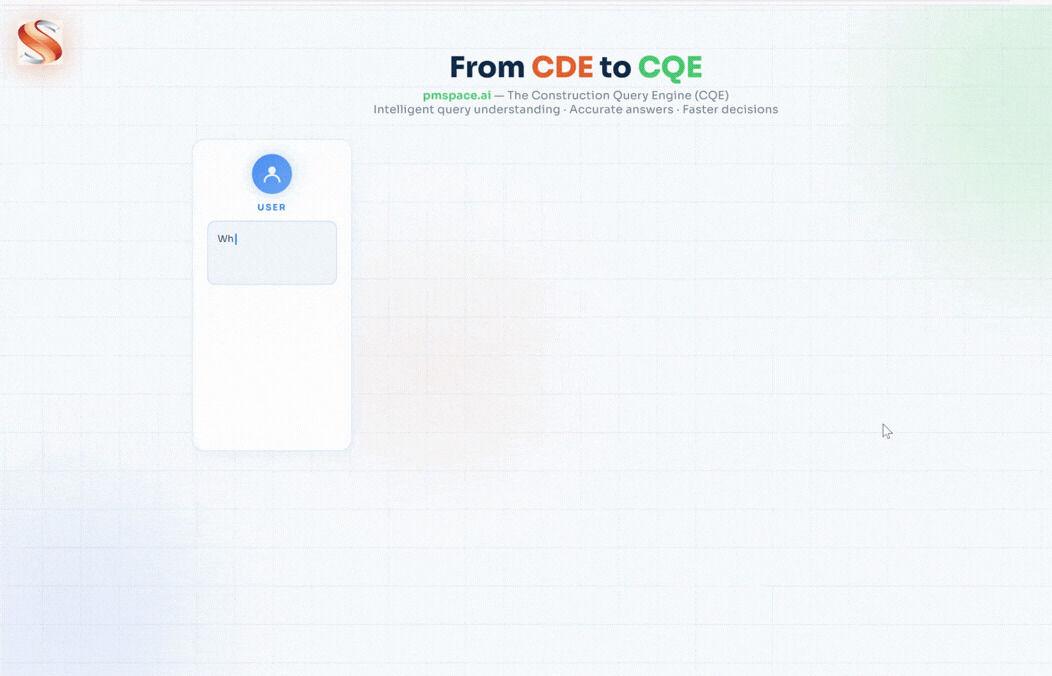
That is the message behind Thomas Jomon's LinkedIn post on the Construction Query Engine: it is time to move beyond CDE as a place where information sits and toward CQE as a layer that helps teams find the right answer faster.
Why Traditional Search Falls Short
Construction information is not simple keyword data. A single project question may depend on a contract clause, drawing revision, RFI response, schedule activity, cost item, site instruction, and approval trail. Standard search can find matching words, but it often misses the connected meaning.
For example, a team may ask whether a design change affects a specific scope package. A keyword search might return the drawing, the RFI, and a few emails. It may not explain which document is current, what decision was made, who approved it, and whether the cost or schedule has already been updated.
This is why teams lose time even when they already have a CDE. The information exists, but the answer still has to be assembled manually.
What a Construction Query Engine Does
A Construction Query Engine is designed to understand project questions, retrieve relevant information across connected sources, and deliver answers with supporting references. Instead of asking users to hunt through every document, it brings the context forward.
For construction teams, this means the system can help answer questions such as:
- Which RFI response changed the current drawing set?
- What approval is blocking this activity?
- Which contract clause applies to this issue?
- What project documents support this decision?
- Which risks are repeated across similar projects?
The important difference is that CQE is not only a chat interface. It is an intelligence layer connected to the project information environment.
Moving Beyond CDE
A Common Data Environment organizes project data. A Construction Query Engine makes that data usable for real decisions. The two ideas work together, but they are not the same.
CDE helps teams centralize and control records. CQE helps teams ask better questions and get faster, source-backed answers. This matters because construction leaders are not simply trying to store more information. They are trying to reduce delay, avoid rework, make defensible decisions, and coordinate people across complex project conditions.
When CQE is connected to documents, schedules, costs, workflows, and communications, the platform can surface the answer in context rather than forcing teams to rebuild context from scratch.
Why Source-Backed Answers Matter
Construction decisions carry commercial, operational, and contractual consequences. AI output cannot be useful if teams cannot verify where an answer came from.
Source-backed answers make the system more practical. A project manager can see the relevant drawing, RFI, specification, or record behind the response. An owner can review the basis for a recommendation. A contractor can understand whether the answer came from the latest approved information or an outdated document.
This is where Space AI's construction intelligence approach becomes valuable. The platform is not just answering questions. It is building the connected context required to make those answers trustworthy.
The Operational Impact
The benefit of CQE is not only faster search. It changes the way teams work.
Instead of spending hours gathering information before a meeting, teams can start with a focused view of the issue. Instead of waiting for someone to check every file manually, stakeholders can review the answer and its sources. Instead of treating every project question as a new investigation, the system can reuse connected project context.
That means faster clarification, fewer missed dependencies, better decision records, and less time lost to manual document chasing.
Conclusion
The Construction Query Engine represents the next step beyond static project repositories. CDE helped construction teams centralize information. CQE helps them turn that information into answers.
For modern construction organizations, the future is not just more data. It is faster access to the right context, the right source, and the right decision path. Space AI is building toward that future by connecting documents, workflows, people, and project intelligence into one decision-ready layer.