
AI-Driven Procurement for Modern Construction Enterprises
Learn how AI-driven procurement helps construction enterprises reduce purchasing delays, improve supplier visibility, and keep project costs under control.

Summary
Key Takeaways
- 1AI-driven procurement connects purchasing, inventory, schedules, and budgets in one decision workflow
- 2Predictive supplier and material insights help teams prevent procurement-related project delays
- 3Automated approvals and invoice matching reduce manual work and improve financial control
- 4Construction enterprises gain stronger cost visibility when procurement data is tied to project execution
- 5Modern procurement systems should support field teams, finance teams, and executives with real-time intelligence
Procurement is one of the quiet pressure points inside every construction project. Materials have to arrive at the right time, vendors need to stay reliable, budgets must remain visible, and approvals cannot sit unattended while work crews wait on site.
For modern construction enterprises, procurement is no longer just a purchasing function. It is a project performance function. A delayed purchase order can affect the schedule. A supplier variance can affect cash flow. A missed invoice mismatch can affect margins.
AI-driven procurement changes this operating model by turning purchasing data into live project intelligence. Instead of tracking suppliers, material orders, inventory, approvals, and invoices in disconnected systems, construction teams can use AI to detect risk, automate routine checks, and make faster decisions before procurement issues become project delays.
What Is AI-Driven Procurement
AI-driven procurement uses artificial intelligence to support purchasing decisions, supplier management, approval workflows, cost control, and material planning. In construction, this means procurement data is connected directly to the project schedule, budget, inventory, and field execution.
A traditional procurement system records what was ordered. An AI-driven procurement system helps answer more valuable questions:
- Which material orders are likely to delay the project?
- Which suppliers are showing risk signals?
- Which purchase requests exceed expected budget ranges?
- Which invoices do not match contracted terms?
- Which approvals need immediate attention to protect the schedule?
This shift matters because construction procurement is deeply time-sensitive. The value is not only in storing purchasing records, but in knowing what action needs to happen next.
Why Procurement Needs Intelligence Now
Construction enterprises are managing larger portfolios, tighter margins, and more complex supply chains. Manual procurement workflows struggle under that pressure.
Supply Chains Are Less Predictable
Material availability, shipping timelines, and vendor capacity can change quickly. Static procurement tracking cannot keep up with these moving conditions. AI helps teams monitor patterns across orders, vendors, and project timelines so they can identify potential disruption earlier.
Cost Pressure Is Increasing
Procurement decisions directly affect project margins. Without real-time budget visibility, teams may approve purchases that look reasonable in isolation but create cost problems at the project level. AI can compare purchase requests against historical pricing, budget allowances, committed costs, and forecasted spend.
Approval Delays Create Site Delays
Many procurement delays are administrative. A purchase request sits in a queue. A quote needs review. An invoice exception waits for clarification. AI-enabled workflows can prioritize approvals based on schedule impact, not just submission order.
Core Capabilities of AI-Driven Procurement
Predictive Material Planning
AI can connect procurement timelines to the project schedule. If an activity is approaching and required materials are not yet ordered or delivered, the system can flag the risk before crews are affected.
This is especially powerful when connected with project scheduling software, because procurement decisions are evaluated against real execution timelines instead of isolated purchasing dates.
Supplier Risk Monitoring
Supplier performance varies over time. AI can analyze delivery history, response times, order accuracy, pricing variance, and issue frequency to identify vendors that may create future problems.
Instead of relying only on anecdotal supplier feedback, enterprises can build a more objective view of supplier reliability across projects.
Automated Purchase Request Review
AI can check purchase requests against project budgets, approved vendors, category limits, historical rates, and contract terms. This reduces repetitive manual review and gives approvers clearer context.
The goal is not to remove human approval. The goal is to give decision-makers the information they need at the moment approval is required.
Inventory and Stock Visibility
Procurement does not end when an order is placed. Teams also need to know what is available, what is reserved, what is delayed, and what needs replenishment. When AI is paired with construction inventory management software, teams can reduce over-ordering, avoid shortages, and align inventory with active project demand.
Invoice and Payment Intelligence
Invoice issues are common in construction: quantity mismatches, unapproved charges, duplicate invoices, or billing outside agreed terms. AI can help identify exceptions earlier and route them to the right person for resolution.
Connected invoice management software helps procurement and finance teams work from the same data, reducing disputes and improving cash flow control.
How AI Procurement Improves Project Outcomes
Fewer Procurement-Driven Delays
When procurement is connected to schedule intelligence, teams can see risk before it reaches the field. If a long-lead item threatens a milestone, project leaders can resequence work, expedite alternatives, or source from another vendor before the delay becomes unavoidable.
Better Budget Control
AI-driven procurement improves cost visibility by linking purchase commitments to project budgets in real time. Teams can see where procurement decisions are pushing the project away from plan and act before overages accumulate.
Stronger Vendor Accountability
With supplier performance data centralized across projects, enterprises can make better sourcing decisions. Procurement teams can compare vendors on delivery reliability, issue rates, pricing consistency, and responsiveness.
Less Manual Administration
AI can reduce the repetitive work that slows procurement teams down: checking data, chasing approvals, identifying missing information, reviewing mismatches, and preparing status updates.
That frees teams to focus on negotiation, supplier relationships, risk management, and strategic purchasing.
What Modern Enterprises Should Look For
The best AI-driven procurement platform for construction should do more than digitize purchase orders. It should connect procurement with the rest of project execution.
Look for capabilities such as:
- Real-time budget and committed-cost visibility
- Supplier performance tracking across projects
- Approval workflows based on financial and schedule impact
- Inventory visibility tied to field demand
- Invoice matching and exception routing
- Integration with scheduling, cost, and document workflows
- Portfolio-level reporting for executives and finance teams
Procurement intelligence becomes much more valuable when it is part of a unified construction management environment.
The Future of Construction Procurement
Procurement is moving from a back-office function to an active control layer for project delivery. The next generation of construction enterprises will not wait for procurement issues to surface in meetings or month-end reports.
They will use AI to identify supply risk early, automate low-value administrative work, and connect purchasing decisions directly to project outcomes.
This is the larger shift from systems that simply record transactions to systems that guide decisions. AI-driven procurement gives construction teams a more proactive way to protect margins, schedules, and supplier performance.
Build Smarter Procurement Workflows with PMSPACE AI
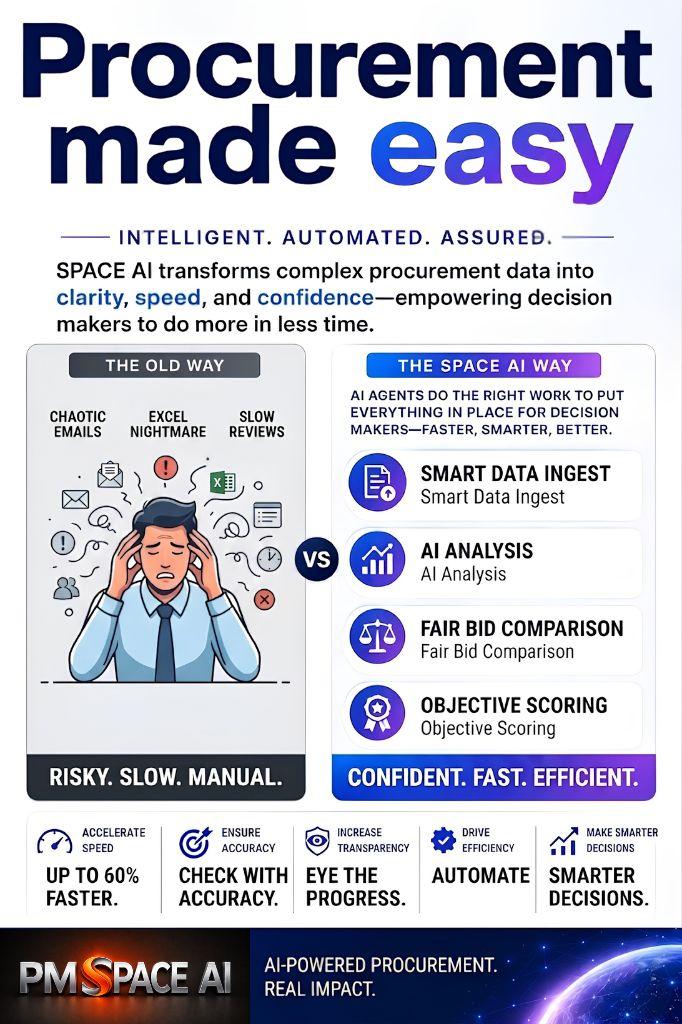
PMSPACE AI helps construction teams connect procurement, inventory, costs, documents, and project execution in one intelligent workflow. Instead of managing purchasing decisions in isolation, teams get real-time visibility into how procurement affects schedules, budgets, and delivery risk.
For enterprises that want to reduce delays, improve cost control, and modernize procurement operations, AI-driven procurement is no longer optional. It is becoming a core part of construction project intelligence.
Start building a smarter procurement workflow with PMSPACE AI.