
Operationalizing Intelligence at Scale with Construction AI Agents
Learn how AI agents, orchestration, and connected project intelligence help construction enterprises turn insight into coordinated action at scale.

Summary
Key Takeaways
- 1AI value scales when intelligence is embedded into daily construction operations
- 2Agentic workflows can monitor signals, route decisions, and coordinate repetitive project actions
- 3AI orchestration connects documents, schedules, costs, procurement, and field activity
- 4Human oversight remains essential for commercial, safety, and project-critical decisions
- 5Connected project data is the foundation for operational AI at enterprise scale
Construction enterprises do not need more isolated insights. They need intelligence that reaches everyday operations: the schedule review, the procurement approval, the RFI response, the cost exception, and the field coordination meeting.
That is the promise behind operationalizing intelligence at scale. AI becomes valuable when it can help teams detect what matters, connect it to project context, and guide the right response without adding another layer of administrative work.
AI agents and orchestration frameworks are creating a practical route to that outcome. Instead of relying on a single dashboard or one-off query, construction organizations can use coordinated AI workflows to monitor project signals, surface risks, assist decisions, and move information to the people who need it.
What Does Operationalizing Intelligence Mean
Operational intelligence is not simply reporting. Reporting summarizes project data. Operational intelligence connects data to action.
In construction, this includes questions such as:
- Which overdue approval is now threatening a critical activity?
- Which procurement delay needs escalation this week?
- Which document revision affects an active scope package?
- Which cost variance needs investigation before the next forecast?
- Which project pattern suggests a risk is about to repeat?
At scale, these questions cannot depend only on people manually searching through systems and spreadsheets. The information must be connected and available inside normal workflows.
Why Construction AI Needs Agents
Construction work is distributed across teams, projects, vendors, documents, schedules, and commercial controls. A useful AI system needs to assist across that operating environment.
AI agents are software capabilities designed to handle focused tasks using project data and defined rules. They can help gather context, classify information, check conditions, recommend next steps, and route attention to the right owner.
Agents Can Monitor Change
Projects shift constantly. Schedule updates, new RFIs, revised drawings, material delays, and cost commitments can change risk from day to day. Agents can monitor these signals continuously and surface exceptions that require attention.
Agents Can Reduce Repetitive Coordination
Teams lose time compiling updates, chasing missing approvals, reconciling information, and preparing recurring summaries. AI-assisted workflows can support this routine work while project leaders retain decision authority.
Agents Can Preserve Context
A risk alert is more useful when it includes the affected milestone, supporting document, owner, cost exposure, and recommended follow-up. Agentic workflows become stronger when they operate on connected project context rather than isolated records.
The Role of AI Orchestration
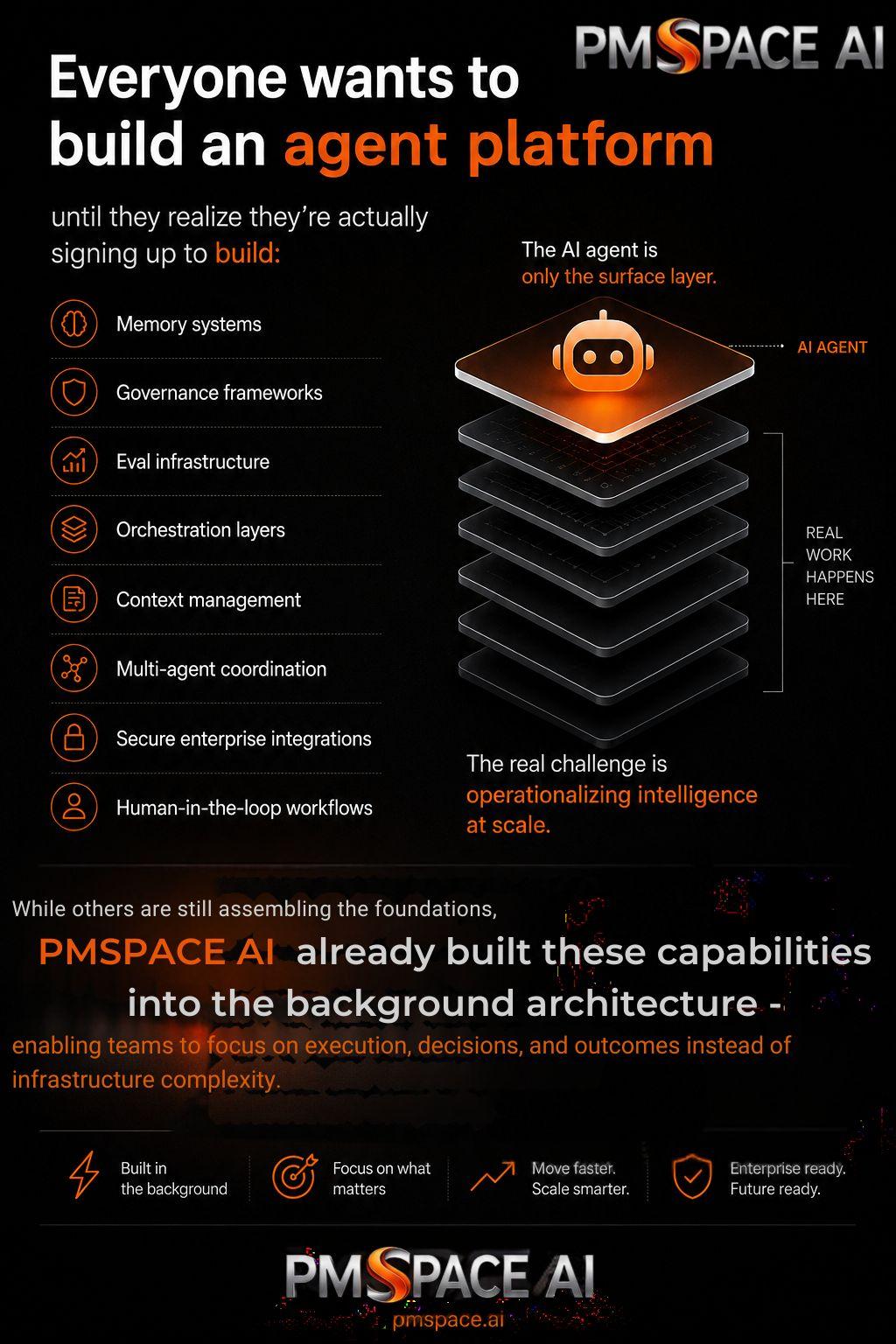
One agent cannot manage the complexity of enterprise construction delivery alone. Orchestration is what coordinates specialized AI tasks around a common project objective.
For example, an orchestration workflow may:
- Detect a delayed material delivery.
- Identify the schedule activities that depend on the material.
- Check whether alternative stock or suppliers are available.
- Estimate possible cost or timeline impact.
- Route the issue to procurement and the project manager with supporting context.
This is how AI moves beyond answering questions and starts supporting coordinated project action.
High-Value Applications in Construction
Schedule and Delay Management
AI agents can watch milestone progress, approval queues, procurement lead times, and activity dependencies. When risk begins to accumulate, teams can be alerted early enough to mitigate it.
Procurement and Supplier Coordination
Purchasing decisions are tightly connected to delivery outcomes. Agents can help identify long-lead material exposure, supplier reliability concerns, missing approvals, and invoice exceptions before they disrupt work.
Document and RFI Intelligence
Project teams handle large volumes of drawings, RFIs, specifications, revisions, and submittals. AI workflows can organize incoming information, link it to affected work packages, and help teams find source-backed answers more quickly.
Cost Control and Forecasting
Agents can assist commercial teams by monitoring commitments, change orders, budget variances, and emerging spending trends. This supports earlier intervention when project costs begin moving away from plan.
Scaling AI Responsibly
Operational AI should help people make better decisions, not hide critical decisions inside automation. Construction organizations should maintain human review for safety-critical work, contractual approvals, commercial commitments, and actions with material project impact.
A strong implementation approach includes:
- Clear ownership for every routed recommendation
- Traceable source data behind AI outputs
- Approval controls for material actions
- Role-based access to project information
- Continuous validation against project outcomes
Trust grows when teams understand why an insight was surfaced and retain control of the decision.
The Foundation: Connected Project Intelligence
Agents and orchestration cannot deliver meaningful outcomes if project information remains fragmented. They depend on a connected foundation across schedules, documents, costs, procurement, field updates, vendors, and approvals.
PMSPACE AI is designed around that connected operating layer. It helps construction teams bring project signals together so AI can analyze context, support workflows, and help organizations operate more intelligently at scale.
Conclusion
Operationalizing intelligence at scale is the next step for AI in construction. The goal is not more disconnected analytics. It is coordinated intelligence that helps teams manage real work with greater speed, visibility, and control.
With connected data, responsible agentic workflows, and strong human oversight, construction enterprises can turn AI from a promising concept into practical project performance.